Every so often a single number captures a shift that years of argument could not. Here is one.
Between 1 March and 15 July this year, Europe’s solar panels saved the continent €20 billion in gas imports. That is according to new analysis from SolarPower Europe, covering the period since the war on Iran sent oil and gas prices climbing again. Over those 137 days, solar delivered average savings of €146 million per day. To put that in perspective, it is more than France spends on its military each day.
I find numbers like this clarifying, because they cut through the ideological noise that so often surrounds energy. This is not about climate politics. It is about money, and about not being exposed to a shock on the other side of the world.
Energy security has quietly changed meaning
For most of the last century, energy security meant securing supply. It meant pipelines, tanker routes, long-term contracts with producer nations, and the diplomatic effort required to keep them intact. Security was about who you bought your fuel from and how much you trusted them.
That definition is being rewritten in real time. When Brent crude climbed to around $85 a barrel following the conflict with Iran, and Iran’s grip on the Strait of Hormuz threatened a fifth of global oil supply, the countries that had invested most heavily in homegrown renewable generation were the least exposed.
As the CEO of SolarPower Europe put it, every megawatt-hour generated by solar reduces dependence on imported fossil fuels and makes Europe safer. Security, in other words, increasingly means generating your own power at home, and holding enough storage and flexibility to smooth out the gaps.
Spain as the case study
Spain offers the clearest illustration. Since 2019, the country has doubled its wind and solar capacity, adding more than 40 gigawatts to its energy mix. The effect on prices has been significant. Analysis by the energy think tank Ember found that Spain’s wind and solar growth reduced the influence of expensive fossil generators on its electricity price by 75% since 2019.
The mechanism is worth understanding, because it explains why renewables lower prices rather than just emissions. In European power markets, the most expensive generator needed to meet demand sets the price for everyone. That is usually gas. As cheaper wind and solar displace gas from the mix, fossil fuels set the price less often. The more renewables on the system, the less frequently the expensive fuel dictates the bill.
The catch, and why it points to storage
There is a genuine tension in this story, and I would not be doing my job if I glossed over it. Spain’s very success has created a new problem. When solar floods the grid at midday, prices can collapse, and some of that clean power is wasted. Recent reporting has asked, fairly, whether Spain’s solar boom has turned to bust as negative prices bite.
The answer is not that solar was a mistake. The answer is that generation has outrun the infrastructure around it. This is exactly the gap that the EU’s recent commitment to quadruple energy storage is designed to close, and it is why the smartest capital in this sector is no longer chasing panels alone. It is looking at generation paired with storage, in the right locations, with revenue structured across more than one market.
Where Portugal sits
Portugal deserves particular attention here. It has one of the strongest solar resources in Europe and has moved earlier than most of its neighbours to pair generation with battery storage. It has been identified by the European Commission as an example of good practice, and the new Spain-Portugal electricity interconnection that came online in July adds another 1,000 megawatts of capacity to move power across the Iberian peninsula.
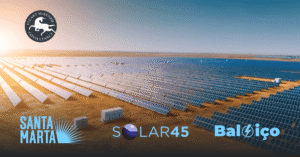
For investors, that combination of resource, policy and infrastructure is rare. It is why I spend more time looking at Iberia than at almost any other European energy market. The Solar45 strategy at Univere Investments is built specifically around solar and co-located storage in Portugal, and the Baloico strategy takes a wider infrastructure view of the region. Both are for qualified professional investors, and both merit proper due diligence rather than a quick read.
The lesson for long-term capital
I keep returning to that €20 billion figure, because it reframes the entire investment conversation. The investors and families I work with tend to think in decades, not quarters. For them, the question is not whether renewable energy is fashionable. It is whether an asset class is aligned with the structural direction of the world.
Energy that is generated at home, that lowers prices, that insulates a continent from geopolitical shocks, and that is now being backed by explicit policy commitment, is aligned with that direction in a way few other infrastructure categories are. The volatility that troubles simple generation assets becomes, with storage attached, a source of return rather than a threat to it.
Ten years ago, a safe energy asset meant a stable supply contract. Today it increasingly means owning a piece of the homegrown, storage-backed generation that makes the old supply contracts matter less. That is a meaningful shift, and the capital that recognises it early tends to be the capital that does best.
If you would like to talk through how energy infrastructure fits within your broader portfolio, I am always glad to begin with a conversation.