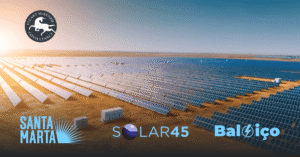
On April 28, 2025, Portugal was experiencing one of its best days ever for energy.
Most of the country’s electricity demand was being met by renewables. Wind power was strong, solar was helping, and hydro was performing well. By nearly every measure, Portugal’s energy transition seemed to be working.
But at 12:33 in the afternoon, the power suddenly went out.
Forty-seven million people in Spain and Portugal lost electricity. In some places, the outage lasted more than sixteen hours. It was the biggest blackout in Iberian history, happening on a day that was supposed to be a celebration.
I have thought about that day ever since—not because it made me doubt the energy transition, but because it actually made me more confident in it. The blackout made clear a point I have tried to explain to clients for a while, but it showed it more simply than I ever could.
Producing the right kind of electricity is not the same as delivering it reliably.
What the investigation actually found
The ENTSO-E final report, released in March 2026, was clear: renewables were not to blame for the blackout. Instead, a series of institutional and regulatory failures cut the Iberian Peninsula off from the European grid in just twenty-one seconds. The problem was not with the technology.
One detail stands out to me. When the blackout happened, the Iberian grid had 24 gigawatts of certified renewable voltage control ready to use. But it could not be activated in real time because Spanish rules required operators to wait for emailed instructions, which could take days to implement. The technology was available, but it sat unused as the grid failed.
This was not a problem with renewable energy. It was a problem with procurement and regulatory systems.
The numbers on interconnection are just as striking. The Iberian Peninsula’s link to the rest of Europe can handle only 3.4% of peak demand, while the EU’s target is 10 to 15%. When Spain’s grid disconnected from France in those twenty-one seconds, Portugal had no backup supply. The main connection disappeared instantly.
The numbers that followed
In some ways, what happened after the blackout is even more interesting than the event itself.
The Portuguese government responded with a €400 million investment plan to make the grid more reliable and prevent future blackouts. This included a competitive tender for 750 megawatts of battery storage. For context, Portugal had only about 13 megawatts of battery storage when the blackout happened. The new target is 750 megawatts. This is not just a small upgrade—it is a major change in how the grid manages electricity.
The Portugal battery energy storage market reached $40.24 million in 2025 and is projected to reach $290.57 million by 2034, growing at a compound annual rate of 24.57%. The policy response and the market opportunity are pointing in the same direction. ACE Battery
In February 2025, two months before the blackout, low wind levels caused electricity prices on the MIBEL exchange to jump 77.6% in one month, with hourly peaks hitting €240 per megawatt hour. This shows Portugal’s direct exposure to gas markets: even though the country is 68% renewable overall, gas still sets the price when wind is low and storage is missing.
Storage is not a supplementary consideration in this market. It is the investment thesis.
For those already working with institutional-grade energy infrastructure, the structured fund routes I work with sit at exactly this intersection of storage, solar and long-term capital. I am happy to point qualified investors in the right direction.
Why this matters for investors
I work with clients who are thinking seriously about energy infrastructure as a long-term asset class. The conversation around Portugal has shifted considerably over the past twelve months, and the blackout is a large part of why.
Before April 2025, Portugal was an interesting market with strong renewable resources, more institutional support, and better policies. After April 2025, it became urgent. The government had to act. The regulatory failures ENTSO-E found needed fixing. The storage gap had to be closed. This urgency has opened up new opportunities for procurement and investment.
Portugal is now developing a capacity market open to batteries, power plants and flexible demand, and has reaffirmed plans to auction 750 megawatts of battery storage capacity, with new pumped hydro projects also identified as a key source of long-duration storage. The EIB has backed wind-hydro hybridisation at the Tâmega complex, pairing new wind capacity with existing pumped storage infrastructure to create dispatchable clean electricity rather than variable generation. That model, generation and storage combined at the asset level, is the structure serious investors in this space should be paying attention to. elitetraveler
I am also keeping a close eye on offshore wind. Portugal has about 131 gigawatts of offshore wind potential, but 89% of it needs floating technology because the Atlantic seabed is so deep. Almost none of this potential has been developed yet. The government is planning its first commercial offshore wind tender for 2026. Developers and investors who get involved in Portugal’s floating offshore projects now are entering at the best time, before a wave of institutional capital arrives after the first successful projects.
The lesson I take from all of this
Much of my career has been spent in fast-changing markets, where the gap between the current state and the needed future was clear and significant. Ukraine before 2022 was one example. The early cannabis and nutraceuticals sector was another. I have seen the same pattern in each case.
The biggest opportunities rarely sit in the most obvious places. They sit in the infrastructure gap between what a market has achieved and what it needs to sustain that achievement. Portugal has built one of the most impressive renewable energy systems in Europe. What it needs now is the storage, the grid services and the regulatory architecture to make that systeThat gap is where I focus my work. I believe it is where the most promising long-term value in European energy infrastructure can be found right now.ure currently lives.
If this connects with something you are thinking about, I am always happy to have a conversation. You can reach me through the contact page at stuartmckenzieconsultancy.com or find me on LinkedIn.
Sources used in this article:
- ENTSO-E Final Report on the Iberian Blackout, March 2026
- Grid Energy X, Medium: Why Did Europe’s Greenest Grid Go Dark on Its Best Day? (June 2026)
- pv magazine: Portugal plans capacity market with dedicated battery storage auction (June 2026)
- Energy Storage News: Portugal to invest €400 million into grid and BESS after Iberian blackout (July 2025)
- IMARC Group: Portugal Battery Energy Storage Market Size and Outlook 2026-2034
- REN / APREN: Portugal Electricity System Data 2025