
I grew up in a world where the safe havens were obvious. Gold in times of crisis. Sovereign debt when equity markets turned. Prime property in stable cities. These were the anchors that serious private wealth returned to when the world felt uncertain.
I still respect those anchors. But I have also watched the assumptions underneath them shift in ways that cannot be ignored. The energy system that supported much of twentieth-century wealth creation is being fundamentally rebuilt. And within that rebuild, one asset class is doing something genuinely unusual. It is getting more valuable precisely when the world around it gets more volatile.
That asset class is standalone battery storage. And I think it deserves a more honest conversation than it usually gets.
The problem with how we have traditionally thought about safety
For most of my career, defensive assets were defined by stability. An asset was safe if its value held when markets fell, if its income was predictable, if it was not exposed to the kind of shock that sent equity portfolios into drawdown.
Battery storage does not fit that definition neatly. It is an infrastructure asset with merchant revenue exposure. Its cash flows are influenced by electricity price spreads, grid conditions, weather patterns and policy. On the surface, that sounds like the opposite of defensive.
But here is what changes when you look at the mechanics more closely. Battery storage does not just tolerate volatility. It earns from it.
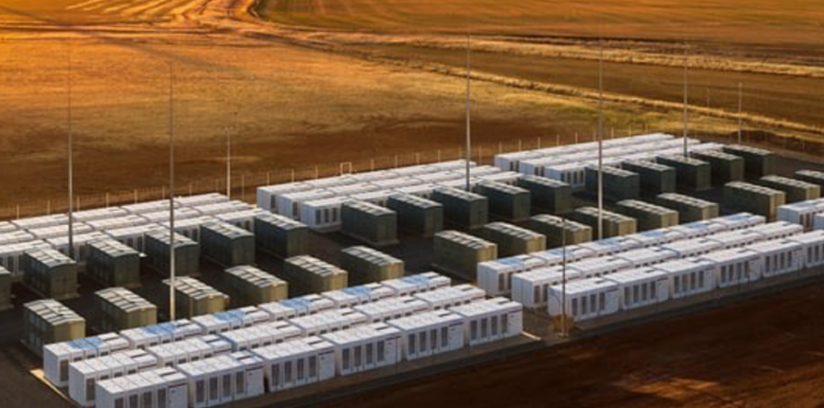
A battery charges when electricity is cheap, typically during periods of high renewable generation, and discharges when electricity is expensive, during peak demand or when the wind drops. The wider the spread between those two prices, the better the battery performs. The volatility that creates problems for consumers and for generators is the commercial engine of the storage model.
That inversion is significant. And it matters enormously in the current energy environment.
What has happened to European electricity markets since 2022
The European electricity market has delivered an education in price repricing over the past three years. Day-ahead spreads in the UK and Germany have widened materially as gas-set marginal pricing collided with rapidly growing renewable penetration. Intra-day spreads have widened further still.
The pattern is now familiar to anyone watching the market. Wind and solar drive prices close to zero during generation peaks. Demand-heavy evenings, particularly in winter, push prices sharply upward. The difference between those two points in a single day can be substantial.
Research from Modo Energy has tracked how the revenue mix for grid-scale battery storage in Great Britain has evolved, shifting meaningfully toward wholesale arbitrage and balancing mechanism services as earlier frequency response markets became more saturated. The asset class has matured and the revenue sources have diversified. That is, in my view, a sign of structural depth rather than fragility.
Why the renewable build-out reinforces the case
Here is the part of the argument I find most compelling, because it is self-reinforcing rather than dependent on a single assumption holding true.
Every additional gigawatt of wind and solar connected to a grid increases the frequency and depth of price dispersion. The International Energy Agency’s Renewables 2024 report documented record global renewable capacity additions in 2023, with projections pointing firmly upward through the decade. That is not a fringe forecast. It reflects committed policy across the UK, Europe and beyond.
As renewable capacity grows, grids become more volatile, not less. Storage becomes more essential, not less. And the price spreads that battery assets earn from widen, not narrow. The secular trend and the asset class are moving together. That alignment is genuinely uncommon in private markets, and it is one of the things that makes me take this seriously as a long-term capital allocation thesis.
What "defensive" actually means here
I want to be careful with the language, because precision matters.
Battery storage is not a capital-guaranteed instrument. It carries merchant revenue risk. Technology degradation over the asset life is real. Policy changes affect revenue streams. None of that should be obscured. Any investor approaching this space needs to understand what they are holding and what risks sit within it.
What I mean when I describe storage as potentially defensive is something more specific. It is an asset whose cash flows are structurally aligned with the conditions that create stress elsewhere in a portfolio. When energy markets are volatile, storage performs better. When grid transition accelerates, storage becomes more essential. That alignment with the forces that typically accompany wider economic uncertainty is a genuine portfolio characteristic worth thinking about.
For family offices with long horizons, it sits alongside traditional defensive allocations rather than replacing them. Gold hedges currency risk. Sovereign debt hedges deflationary pressure. Well-structured battery storage can hedge the energy transition itself.

The governance layer that most people miss
This is where I spend the most time in conversation with clients who are approaching this space seriously, and it is the part that is most often overlooked in summary-level discussions.
Battery storage is not a passive theme. Owning exposure to the sector through a listed utility or a broad infrastructure fund captures something, but it dilutes the asset-level discipline that determines actual outcomes.
Identical hardware can generate substantially different revenues depending on grid connection priority, charging cycle management, augmentation policy, warranty structure, off-take agreements and the credit quality of the counterparties involved. The operational decisions being made around an asset matter as much as the asset itself.
This is where well-governed private capital structures have an advantage. They can maintain the alignment between operator decisions and investor outcomes that listed vehicles cannot. The key question is not simply whether to own storage, but at which point in the value chain, and under what governance structure.
How this connects to what I look at for clients
For clients who are exploring energy infrastructure as part of a broader alternatives allocation, the storage question tends to arise in the context of a larger thesis about where the energy transition is creating durable investment value.
I have written separately about why the interesting money in solar has moved beyond the panels themselves, toward storage, grid access and development positioning. Battery storage co-located with solar generation is a particularly compelling combination, because it addresses the intermittency weakness of solar directly and creates a more complete revenue profile for the combined asset.
The Baloico strategy at Univere Investments takes an infrastructure lens to this space that is worth understanding in detail for qualified professional investors. It reflects the kind of asset-level discipline and governance thinking that I believe separates credible exposure from thematic noise in this sector. The Solar45 strategy integrates solar development with co-located battery storage in Portugal and represents a complementary expression of the same underlying thesis.
Both are structured for qualified professional investors. The conversation begins with the documentation rather than with a headline figure.
The quiet repositioning
The investors I most respect are those who recognise that the definition of a safe haven is not fixed. It reflects the risks of a particular era. In an era of energy transition, grid volatility and accelerating renewable build-out, an asset that earns from that volatility rather than suffering from it deserves a place in the conversation about long-term capital allocation.
This is not a trade. It is not a short-cycle opportunity to be rotated in and out of. It is an infrastructure thesis that plays out over decades. The families and institutions that are positioning now, thoughtfully and with proper due diligence, are the ones I expect to look back on this period as a meaningful entry point.
If you would like to talk through how energy storage infrastructure fits within your current portfolio thinking, I am happy to start with a quiet conversation.